
Transform YourDevOps Pipeline
Accelerate software delivery, enhance reliability, and optimize operations with our comprehensive DevOps services and expertise.
Modern DevOps Pipeline
CI/CD
Continuous Integration & Delivery
Infrastructure
Infrastructure as Code
TRUSTED BY INNOVATIVE COMPANIES




Comprehensive DevOps Services
We offer end-to-end DevOps solutions designed to accelerate delivery, improve reliability, and optimize your software development lifecycle.
CI/CD Pipeline Implementation
Build sophisticated continuous integration and delivery pipelines that automate testing, integration, and deployment processes for faster, more reliable software releases.
Infrastructure as Code
Define and manage your entire infrastructure using code to improve consistency, scalability, reliability, and enable version-controlled configuration management across all environments.
Containerization & Orchestration
Implement and optimize Docker containers and Kubernetes orchestration to dramatically improve application deployment consistency, scaling capabilities, and operational management.
Monitoring & Observability
Implement sophisticated observability solutions that provide deep visibility into your application's performance, health, and user experience across complex distributed systems.
DevSecOps Integration
Seamlessly embed robust security practices throughout your development lifecycle to identify and remediate vulnerabilities early, ensuring compliance without sacrificing delivery speed.
Cloud-Native Architecture
Design and implement modern cloud-native applications that fully leverage managed services, containerization, and serverless computing for maximum scalability, cost-efficiency, and operational reliability.
MLOps Implementation
Streamline your machine learning development lifecycle with robust MLOps pipelines that accelerate model development, training, evaluation, deployment, and monitoring.
AI Integration & Engineering
Effectively incorporate AI capabilities into your applications and workflows with expert implementation of machine learning models, LLMs, and AI-driven automation systems.
DevOps Transformation Approach
We follow a structured methodology to implement DevOps practices that are tailored to your organization's specific needs, capabilities, and goals.
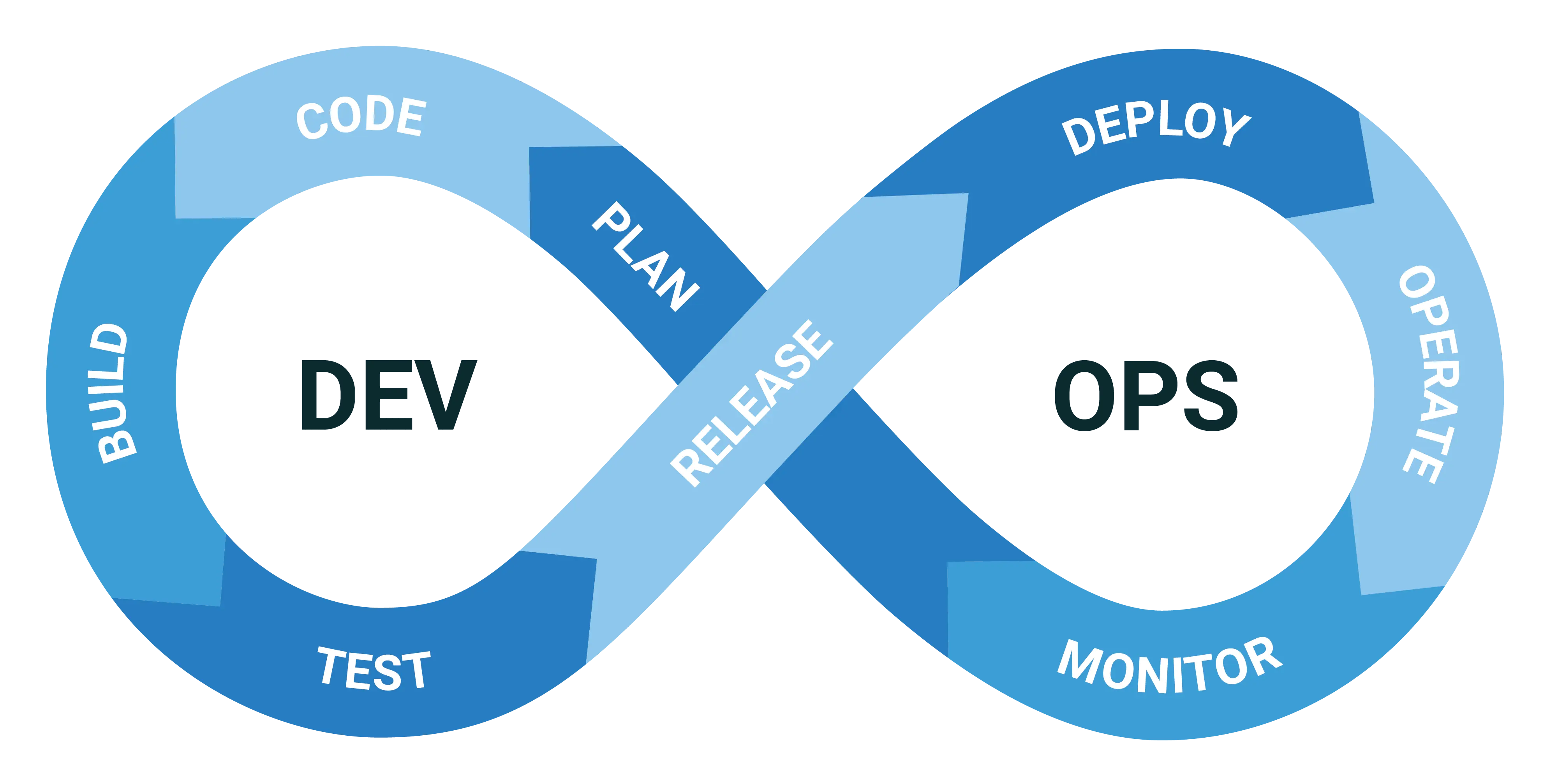
Our Implementation Process
1Assessment & Discovery
We evaluate your current development and operations processes, tools, and pain points to identify key improvement opportunities.
2Strategy & Roadmap Creation
We develop a comprehensive DevOps transformation plan with prioritized initiatives tailored to your organizational goals and constraints.
3Implementation & Integration
We execute the roadmap through tool configuration, pipeline development, automation implementation, and infrastructure modernization.
4Knowledge Transfer & Coaching
We train your team on new processes, tools, and practices to ensure sustainable adoption and continuous improvement.
Key Benefits of DevOps
Accelerated Delivery
Reduce time-to-market with automated testing, continuous integration, and deployment pipelines.
Improved Reliability
Enhance system stability with consistent deployments, observability, and automated recovery.
Scalable Infrastructure
Create adaptable systems that efficiently handle varying workloads and business growth.
Enhanced Collaboration
Break down silos between development, operations, and security teams for better outcomes.
Real-World Results
Our DevOps implementations have delivered significant improvements in deployment frequency, stability, and team productivity.
Deployment Pipeline Transformation
A high-traffic e-commerce platform struggled with slow release cycles and frequent production issues. We implemented a CI/CD pipeline with automated testing and containerized microservices architecture.
Compliance Automation
A financial institution needed to maintain strict security controls while accelerating delivery. We implemented DevSecOps practices with compliance-as-code and automated security scanning.
Infrastructure Modernization
A healthcare provider sought to modernize legacy infrastructure for better scalability and reliability. We implemented infrastructure as code with automated provisioning and configuration management.
DevOps Technologies & Tools
We have expertise across the entire DevOps toolchain, allowing us to select the right technologies for your specific needs
CI/CD & Build Tools
Infrastructure & Configuration
Containerization & Orchestration
Monitoring & Observability
Security & Compliance
Cloud Platforms
Frequently Asked Questions
Get answers to common questions about our DevOps services
How long does it typically take to implement DevOps practices?
While quick wins can be achieved in weeks, a comprehensive DevOps transformation typically takes 3-6 months for initial implementation and up to a year for full organizational adoption and maturity. We focus on iterative improvements that deliver value at each stage.
Do we need to adopt all DevOps practices at once?
No. We recommend a phased approach based on your organization's priorities and readiness. We'll help you identify the highest-impact areas to address first and build on those successes incrementally.
How do DevOps practices impact our existing security protocols?
DevOps enhances security through DevSecOps principles, which integrate security practices into the development lifecycle. This includes automated security testing, compliance as code for frameworks like HIPAA and SOC2, and secure infrastructure configuration, leading to more consistent and robust security practices while ensuring regulatory compliance.
Can DevOps work for legacy applications?
Yes. While cloud-native applications may be easier to integrate with DevOps practices, we have extensive experience applying DevOps principles to legacy applications through approaches like strangler patterns, containerization, and automated testing frameworks.
How will DevOps affect our teams' roles and responsibilities?
DevOps fosters collaboration between development, operations, and security teams. While specific responsibilities may evolve, the goal is to break down silos and create shared ownership for software delivery and reliability, not to eliminate roles.
What metrics should we track to measure DevOps success?
Key metrics include deployment frequency, lead time for changes, change failure rate, and mean time to recovery. We also recommend tracking team satisfaction, customer experience metrics, and business outcomes that align with your organizational goals.