


In today's digital landscape, B2B companies face unique challenges in connecting with their target audience. Unlike B2C marketing, where emotional appeal and immediate conversions often drive strategy, B2B SEO content marketing demands a more sophisticated approach focused on establishing expertise, building trust, and nurturing long-term relationships throughout complex buying cycles.
Search engine optimization (SEO) and content marketing have evolved from separate disciplines into integrated strategies that work hand-in-hand. For B2B companies, this integration isn't just beneficial—it's essential for sustainable growth and competitive advantage.
Understanding B2B SEO Content Marketing
B2B SEO content marketing combines the technical aspects of search optimization with the creative elements of content development to create valuable resources that both search engines and potential clients can discover and appreciate. At its core, it's about creating content that:
- Ranks well in search results for relevant industry terms
- Addresses specific pain points and challenges faced by potential clients
- Positions your company as a thought leader and trusted authority
- Moves potential clients through each stage of the decision-making journey
- Generates qualified leads that translate into meaningful business relationships
Key Components of an Effective B2B SEO Content Strategy
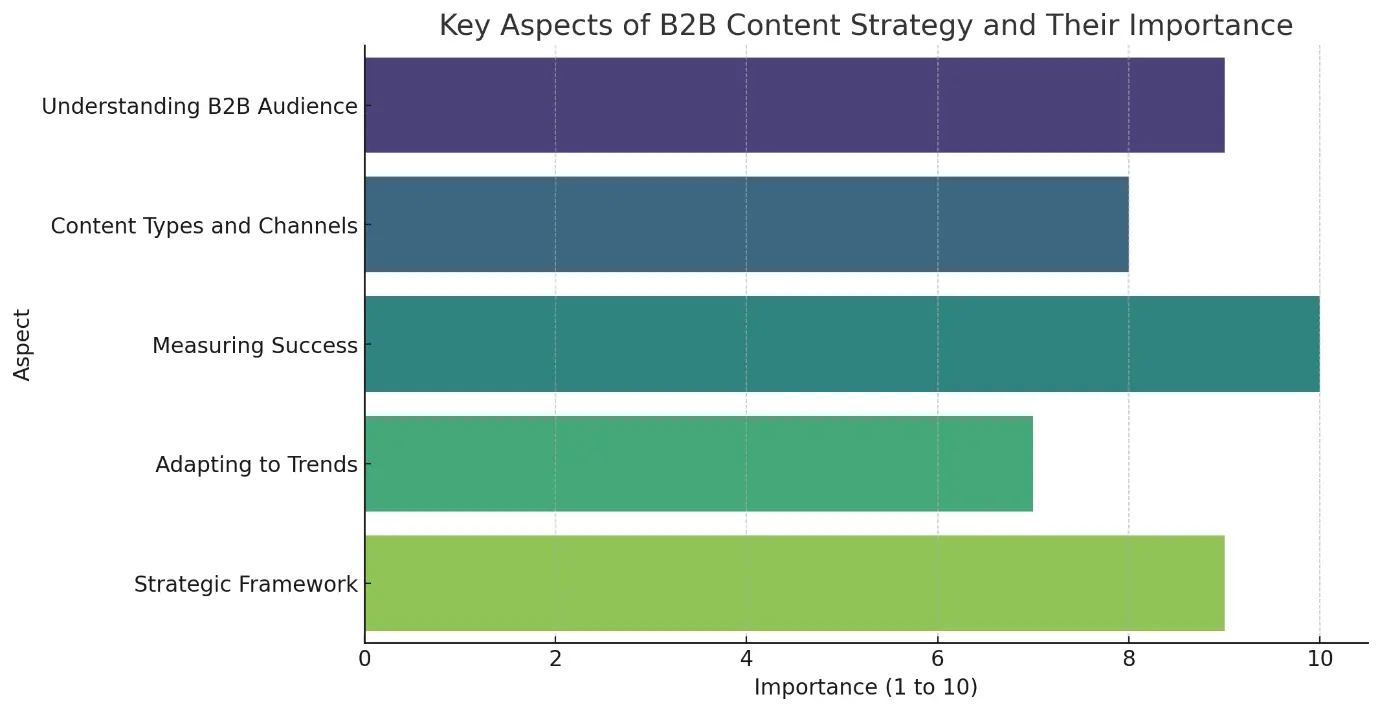
The most successful B2B SEO content strategies incorporate several critical elements that work together to drive visibility, engagement, and conversion.
1. Deep Audience Understanding
Unlike B2C content that might target broad demographics, B2B content must speak directly to specific roles within target companies. Developing detailed buyer personas is essential, focusing on:
- Job titles and responsibilities
- Industry-specific challenges
- Decision-making authority and processes
- Information needs at each buying stage
- Preferred content formats and channels
Armed with this understanding, you can create content that resonates with decision-makers, influencers, and end-users throughout the buying committee.
2. Strategic Keyword Research
B2B keyword research differs significantly from B2C approaches. It should focus on:
- Industry-specific terminology and technical terms
- Long-tail keywords that indicate high purchase intent
- Question-based queries that reveal information needs
- Problem-solution pairings that match your offerings
The most valuable B2B keywords often have lower search volume but much higher commercial intent and conversion potential. Don't be discouraged by modest search numbers—these targeted terms often deliver the most qualified traffic.
3. Content Mapping for the Buyer's Journey
B2B purchase decisions typically involve longer consideration cycles and multiple stakeholders. Your content strategy should address each stage of this journey:
- Awareness Stage: Educational blog posts, industry reports, and thought leadership content that helps prospects identify and frame their challenges
- Consideration Stage: Case studies, comparison guides, and detailed solution explanations that position your offerings in the context of the prospect's needs
- Decision Stage: Technical specifications, implementation guides, and ROI calculators that provide the justification needed for final approval
By mapping content to these stages, you ensure that prospects find relevant information that moves them naturally toward a purchase decision.
4. Technical SEO Fundamentals
While compelling content is essential, technical SEO elements provide the foundation that allows your content to be discovered. Key considerations include:
- Site architecture that facilitates topic clustering and internal linking
- Mobile responsiveness for increasingly mobile B2B researchers
- Page speed optimization to reduce bounce rates
- Structured data markup to enhance search result visibility
- XML sitemaps that ensure proper indexing
These technical elements work behind the scenes to maximize the visibility and impact of your content investments.
Content Formats That Drive B2B Results
While blog posts often form the backbone of content strategies, successful B2B companies leverage a diverse mix of formats to engage prospects throughout the buying journey:
- In-depth Guides and Whitepapers: These comprehensive resources establish authority and capture lead information through gated downloads
- Case Studies: Real-world examples demonstrating measurable results provide social proof and practical application insights
- Webinars and Video Content: Interactive formats that humanize your brand while delivering complex information in digestible ways
- Data Visualizations and Infographics: Visual representations that simplify complex concepts and are highly shareable across platforms
- Interactive Tools: Calculators, assessments, and configurators that engage users while demonstrating value
Each format serves specific purposes in your content ecosystem, addressing different learning preferences and information needs.
Measuring Success: Beyond Rankings and Traffic
While improved search visibility is important, sophisticated B2B content marketing programs measure success through metrics that align with business objectives:
- Qualified Lead Generation: The volume and quality of leads directly attributed to content assets
- Content Engagement: Time on page, scroll depth, and interaction rates that indicate content relevance
- Sales Enablement Impact: Content influence on sales cycle length and close rates
- Customer Retention and Expansion: Content contribution to account growth and reduced churn
- Return on Content Investment: Revenue attributed to content initiatives relative to production costs
By focusing on these business-oriented metrics, you can demonstrate the true value of your SEO content marketing efforts beyond vanity metrics.
Common Challenges and How to Overcome Them
Even the most thoughtful B2B SEO content strategies face obstacles. Here's how to address common challenges:
Content Production Constraints
Many B2B organizations struggle with limited resources for content creation. Address this by:
- Repurposing existing content across multiple formats to maximize return on investment
- Developing a sustainable production calendar that prioritizes high-impact topics
- Leveraging subject matter experts through interviews rather than expecting them to create content directly
Technical Complexity
B2B products and services often involve sophisticated concepts that are challenging to communicate. Overcome this by:
- Using progressive disclosure to layer information from basic to advanced
- Incorporating visual elements that clarify complex ideas
- Creating content that addresses different knowledge levels within your audience
Extended Sales Cycles
The lengthy B2B buying process can make it difficult to attribute results to specific content. Counter this by:
- Implementing robust attribution modeling that captures content touchpoints throughout the customer journey
- Developing content sequences that maintain engagement over time
- Creating nurture pathways that systematically move prospects toward purchase readiness
Future Trends in B2B SEO Content Marketing
As we look ahead, several emerging trends will shape B2B SEO content strategies:
- AI-Enhanced Content Creation: Artificial intelligence tools will increasingly assist in content optimization and personalization
- Semantic Search Optimization: Moving beyond keywords to focus on topical authority and entity relationships
- Voice and Visual Search: Adapting content for new search modalities as they gain adoption in professional contexts
- First-Party Data Utilization: Leveraging proprietary customer insights to create uniquely valuable content as third-party data becomes less accessible
Organizations that anticipate and adapt to these trends will maintain competitive advantage in increasingly sophisticated digital marketplaces.
Conclusion
Effective B2B SEO content marketing represents the intersection of technical expertise, strategic thinking, and creative execution. By developing content that addresses specific audience needs throughout the buying journey while optimizing for search visibility, B2B organizations can build sustainable competitive advantage.
The most successful programs view content not as a marketing expense but as a business asset that generates compound returns through improved visibility, enhanced reputation, and shortened sales cycles. By investing in quality over quantity and focusing on measurable business outcomes, your organization can transform content from a cost center to a growth engine.